


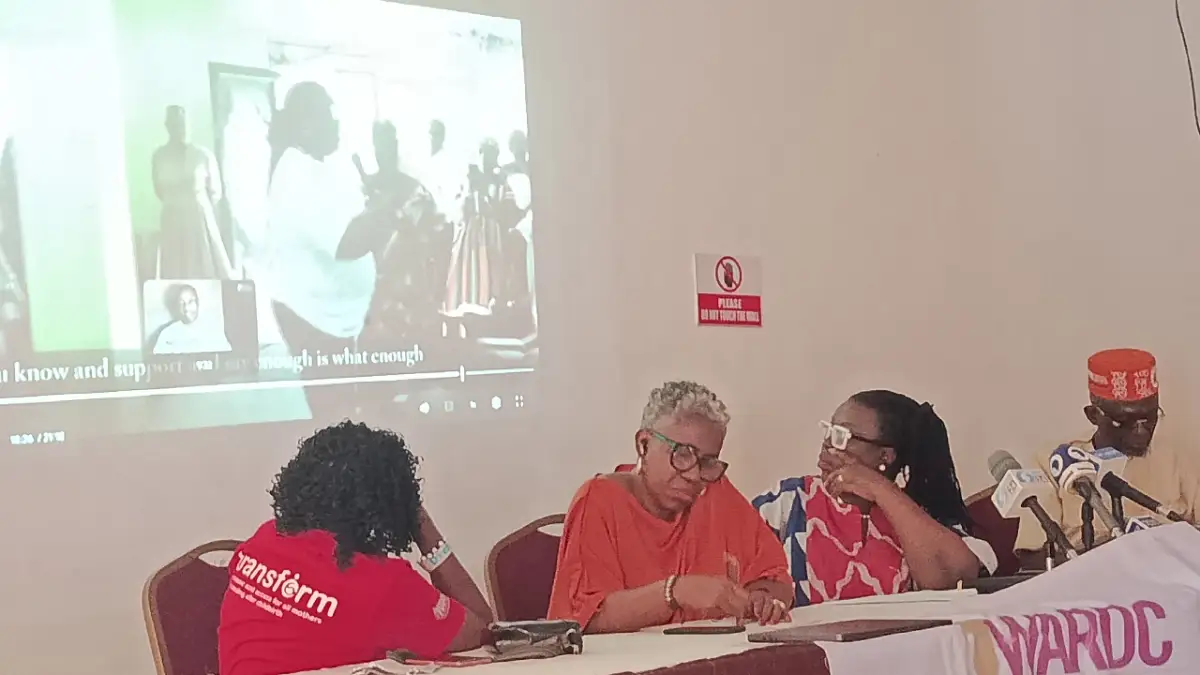
Women Advocates Research and Documentation Centre, WARDC, has intensified calls to make Tranexamic Acid, TXA, accessible to women as a critical step toward addressing Postpartum Haemorrhage, PPH, one of the leading causes of maternal deaths in Nigeria.
The organisation harped on access of this line of treatment for postpartum haemorrhage, a serious childbirth complication accompanied by excessive bleeding after delivery.
Postpartum haemorrhage remains one of the most dangerous threats to maternal survival, Dr. Abiola Akiyode-Afolabi, the Founder of WARDC said at a press conference held in Lagos on Monday.
Following its Project TRANSFORM, a 12-month community-focused intervention designed to reduce maternal mortality through the use of TXA, WARDC, with technical and research support from the London School of Hygiene and Tropical Medicine, LSHTM, said the initiative focuses on improved awareness, access, and advocacy for Tranexamic Acid, a World Health Organisation, WHO, recommended life-saving medicine for the treatment of Postpartum Haemorrhage, PPH.
What Postpartum Haemorrhage means for women
Postpartum haemorrhage is a serious childbirth complication defined as excessive bleeding after delivery, usually within the first 24 hours but sometimes occurring later. It remains one of the most dangerous threats to maternal survival, accounting for almost 25 per cent of Nigeria’s high maternal mortality ratio.
According to WARDC, many Nigerian women die daily from postpartum haemorrhage due to delayed response, limited access to essential medicines, and poor integration of life-saving interventions into routine maternal care. WHO has recommended that Tranexamic Acid, when administered early during postpartum bleeding, can significantly reduce deaths from postpartum haemorrhage. Despite this, access to Tranexamic Acid remains limited across many public and private health facilities. “Project TRANSFORM was designed to respond directly to this gap, as part of WARDC’s commitment to advancing women’s lives. No woman should die while giving birth,” the organisation stated.
Project TRANSFORM: Reaching communities, saving lives
Over the last 10 months, WARDC, working with community leaders, health advocates, civil society actors, and media professionals, implemented extensive community engagement and advocacy activities across Lagos State under Project TRANSFORM.
The project reached more than 20,000 people through town hall meetings, grassroots dialogues, engagements at primary healthcare centres, faith-based spaces, and market outreaches.
Digital and social media advocacy also reached over five million people globally, amplifying accurate information on Postpartum Haemorrhage, the role of Tranexamic Acid, and the urgent need to strengthen maternal health systems.
WARDC said Project TRANSFORM prioritised women of reproductive age, families, community influencers, and decision-makers, ensuring that conversations about maternal survival moved beyond health facilities into homes, communities, and policy spaces. Through these efforts, the project strengthened public understanding of preventable maternal deaths and evidence-based solutions such as Tranexamic Acid.
Beyond awareness: The call for action
WARDC acknowledged that strong partnerships were central to the success of Project TRANSFORM. While WARDC led advocacy design, community mobilisation, and gender-responsive messaging, LSHTM provided research support, global best practices, and evidence-driven insights that strengthened the project’s impact.
However, the organisation stressed that awareness alone cannot save lives.
Therefore, WARDC called on federal and state governments to subsidise and include Tranexamic Acid in standard delivery kits in public health facilities and ensure consistent availability at all levels of care.
Health authorities were urged to integrate Tranexamic Acid into maternal health protocols and training curricula, while strengthening supply chains to prevent stock-outs.
Development partners and the media were also encouraged to sustain support and accountability for maternal health interventions.
In conclusion, WARDC said the outcomes of Project TRANSFORM show that informed communities and evidence-based advocacy can drive change. Dr. Akiyode-Afolabi reiterated the organisation’s message that “no woman should die while giving birth,” stressing that no family should lose a loved one to PHH and no proven, affordable medicine like Tranexamic Acid should remain out of reach.
